
Section menu
Community

Category menu
Tourette syndrome is not just swearing
 Posted 19hrs ago
by Katie Hankey

Share
My life living with Tourette syndrome and FND
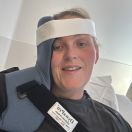
My name is Katie Hankey, and for most of my life I’ve lived with Tourette syndrome. More recently, my life has been changed dramatically by Functional Neurological Disorder (FND).
I want to share my story because I believe there is so much more to these neurological conditions than people realise. I want to challenge misconceptions, raise awareness and help others understand what living with both conditions can really look like.
Living with Tourette syndrome
Tourette syndrome is not just swearing. I’m living proof of that.
For most of my life, I’ve experienced motor and vocal tics, including longstanding neck tics. Tourette syndrome affects far more than the occasional movement or sound that people might notice. It can affect everyday life, concentration, relationships, confidence and the ability to feel comfortable in your own surroundings.
My tics can be exhausting, painful and unpredictable. Severe tic attacks can last for hours and sometimes require hospital treatment. Things such as stress, tiredness, noise and overwhelming environments can make my symptoms significantly worse.
One of the biggest misconceptions about Tourette syndrome is that it is simply about saying inappropriate words. In reality, my experience involves much more than that. My tics are involuntary, and managing them can take an enormous amount of physical and emotional energy.
I’ve lived with these challenges for years, and although they haven’t always been easy, I’ve learned to navigate life with Tourette syndrome.
What I never imagined was how dramatically things would change following one particularly severe neck tic.
When a tic changed my life
I’ve always experienced neck tics, but following a particularly severe tic, my head became locked in an abnormal position. Unlike anything I’d experienced before, it didn’t simply release. What followed was a lengthy and incredibly difficult medical journey involving prolonged torticollis, brachial plexus injury and brachial neuritis, alongside a diagnosis of Functional Neurological Disorder.
I’ve spent weeks in hospital, undergone manipulation of my neck under anaesthesia and faced complications that have dramatically affected my mobility and independence. I’ve lost movement and sensation in much of my right arm. Things that once came naturally, such as washing myself, getting dressed and doing my own hair, have become things I can no longer manage independently.
Before my neck manipulation, I couldn’t even safely walk outside alone. I struggled to see kerbs and uneven surfaces because of the position of my head. Something I had experienced as part of my Tourette syndrome for years had been followed by consequences that I could never have anticipated.
Tourette syndrome and FND: what’s the difference?
One thing I particularly want people to understand is that Tourette syndrome and Functional Neurological Disorder are two different neurological conditions, even though there can be some similarities and overlap.
For me, Tourette syndrome involves motor and vocal tics. These are involuntary movements and sounds that I experience as part of my longstanding condition. They can be difficult to manage, physically exhausting and sometimes extremely painful.
FND is different. It affects how the brain sends and receives signals, resulting in genuine difficulties with movement, sensation and other neurological functions. My experience of FND has included significant difficulties with movement and sensation, as well as functional non-epileptic seizures.
Although both conditions affect my nervous system and can have a huge impact on my everyday life, they don’t feel the same. It is important to recognise that not every movement is a tic, and not every neurological symptom I experience is caused by Tourette syndrome.
Having both conditions can make things particularly complicated. There are overlapping challenges, but understanding which condition is responsible for which symptoms is important when it comes to receiving appropriate support and treatment.
I also think it highlights just how misunderstood neurological conditions can be. Symptoms aren’t necessarily visible, and just because someone looks fine doesn’t mean they aren’t struggling.
The impact on my everyday life
Perhaps the hardest part isn’t even the physical pain. It’s watching everyone around me carry on with their lives while I’m struggling to do things that most people take completely for granted.
It’s losing my independence.
It’s having to rely on other people for the most basic everyday tasks.
It’s needing help with getting dressed, washing and looking after myself.
It’s looking at the life I had before and wondering when, or even whether, I’ll get parts of it back.
My wife, Emily, has been a huge part of my journey, supporting me through hospital admissions, difficult days and the uncertainty of recovery. But neurological conditions don’t just affect the person diagnosed. They affect the people around them too.
There are days when I feel frustrated, frightened and overwhelmed by how much my life has changed. Recovery is uncertain, and living with that uncertainty is incredibly difficult.
Why I’m sharing my story
I want people to understand something:TOURETTE SYNDROME IS NOT JUST SWEARING.
There is so much more to this condition than the stereotypes people see on television or social media.
I also want people to understand FND and recognise that it is a genuine neurological condition. The symptoms are real, they can be disabling, and they deserve to be taken seriously.
My experience has shown me just how complex life with neurological conditions can be. Living with Tourette syndrome was already challenging, but navigating an additional diagnosis of FND and the physical complications I’ve experienced has brought challenges I never imagined facing.
I’m sharing my story because I want to challenge misconceptions, encourage understanding and help others living with these conditions feel less alone.
Looking towards the future
I don’t know exactly what my recovery will look like. I don’t know how much movement or sensation I will regain in my right arm, or how much of my independence I will get back.
But I do know that I want to keep raising awareness.
I want to use my experiences to make a difference, whether that’s helping someone understand Tourette syndrome beyond the stereotypes, helping someone recognise FND, or simply reminding another person living with neurological conditions that they aren’t alone.
I’ve learned not to take the little things for granted.
Being able to get dressed independently, wash your own hair, walk outside without assistance or simply use both arms without thinking about it.
These are things I never thought twice about. Now they are things I hope one day to do again.
My journey hasn’t been what I imagined, and there are still many uncertainties ahead. But I don’t want my conditions to define everything about me. I want to turn some of the hardest experiences of my life into something positive by helping others feel understood.
If there is one thing I hope people take away from my story, it is this: look beyond the stereotypes, listen to people’s experiences and never underestimate what someone might be going through.
And above all, never take your health, independence or the little things in life for granted.
 Return to blog


