
Category menu
VIBES Study 2 (Vibrotactile Interventions for Behavioural and Emotional Symptoms of tic disorders.)
Posted on 14 October 2026 by Pippa McClounan

Share
A research study from the University of Nottingham
Could a gentle vibration help manage tics?
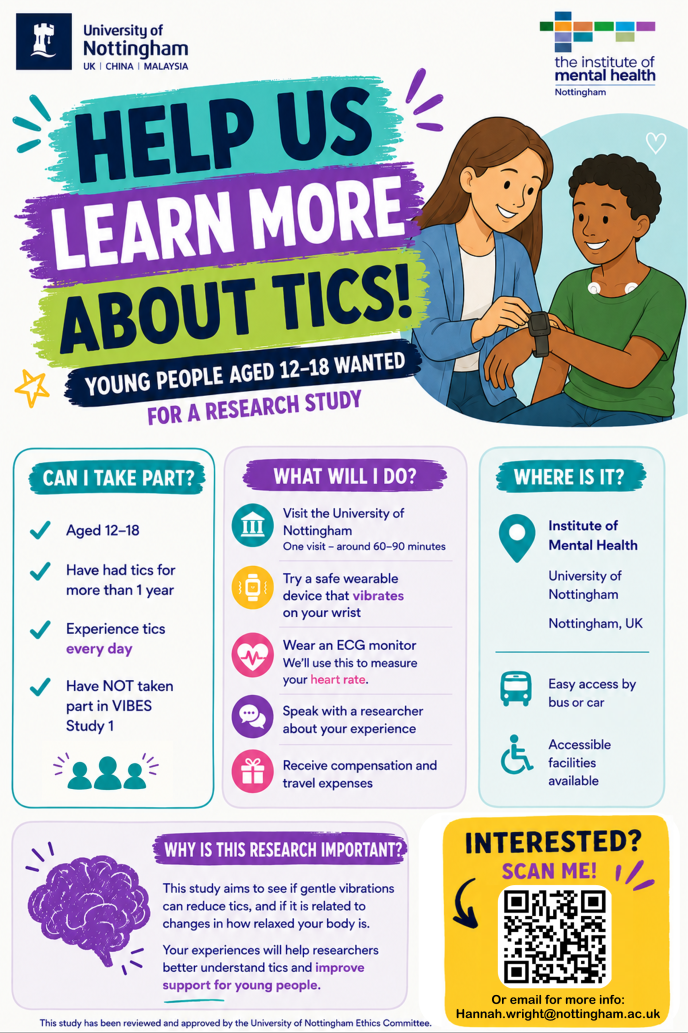
Researchers at the University of Nottingham are looking for young people with Tourette syndrome to take part in the VIBES study 2. The study is exploring whether a small wearable device that delivers gentle vibrations can help reduce tics and tic-related urges.
A previous pilot study found promising results, with participants reporting fewer tics, reduced urges, and a calming effect. This new study aims to better understand how and why this approach may work by looking at its effects on the body's stress and relaxation responses.
By taking part, you'll help advance research into new, non-invasive ways of supporting young people with Tourette syndrome and their families.
Why is this important?
Many people with Tourette syndrome and chronic tic disorders experience tics that can have a significant impact on daily life, yet existing treatments are not always accessible or easy to maintain. Vibrotactile stimulation, a gentle vibration delivered through a wearable device, has shown promising early results in reducing tics and helping young people feel more relaxed. This study will help researchers understand how and why it works, whether its effects can be replicated in a new group of young people, and whether it could become a practical, non-invasive option to complement existing treatments in the future.
Who can take part?
Your child may be eligible to take part if they:
- Are aged 12-18 years
- Have experienced tics for at least one year
- Typically have tic-free periods of no longer than five minutes during a normal day (when not actively trying to suppress their tics)
- Have not previously taken part in VIBES Study 1
 Return to news


