
Category menu
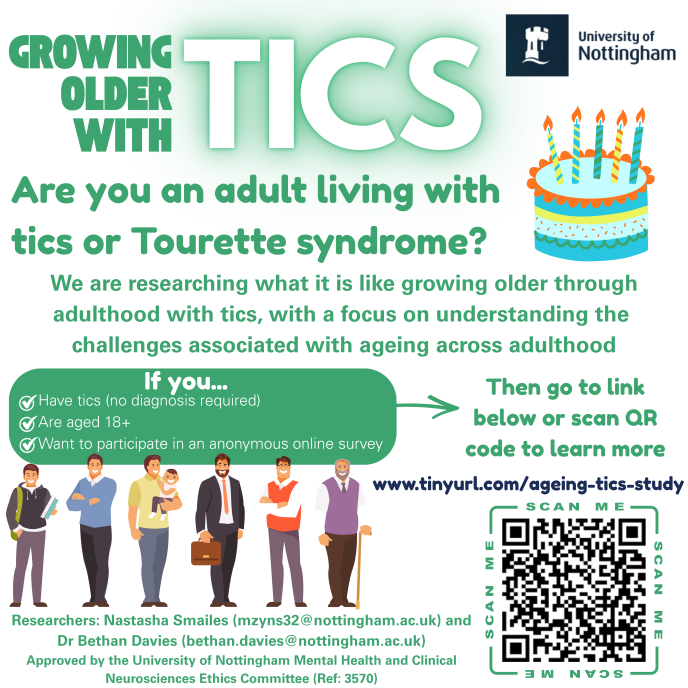
Growing older with tics: An online survey exploring ageing and tic disorders
Posted on 19 October 2026 by Pippa McClounan

Share
A research study from the University of Nottingham
How does Tourette syndrome change as we grow older?
Researchers are looking for adults with tic disorders to take part in a study exploring the experience of ageing with tics. While much research focuses on childhood, very little is known about how tics affect people throughout adulthood and later life. This study aims to understand the challenges and opportunities that may arise over time, including experiences of work, relationships, wellbeing, identity, retirement, and physical health.
By sharing your experiences, you can help build a better understanding of ageing with tics and inform future support, services, and awareness for adults living with Tourette syndrome and other tic disorders.
Why is this important?
Despite growing awareness of Tourette syndrome and tic disorders, very little research has explored what it is like to grow older while living with tics. Adults may face a range of challenges throughout life, including navigating work and retirement, managing physical and mental health, deciding whether to disclose their condition, and dealing with misconceptions that tics can be easily controlled or simply disappear with age.
This study will give adults with tic disorders the opportunity to share their experiences and help researchers better understand how tics interact with ageing, health, and everyday life. The findings will help identify gaps in support and inform future services, resources, and awareness initiatives, ensuring that people with tic disorders are better supported throughout their lives.
Who can take part?
Adults aged 18 years and over from any country are invited to take part if they have tics or a tic disorder and are able to complete a survey in English. Taking part is entirely voluntary and offers an opportunity to contribute to a better understanding of what it is like to live and age with a tic disorder.
 Return to news


