Section menu
Community

Category menu
Visibility Matters: A Late-Diagnosed Journey with Tourette syndrome
 Posted Wed 21st Jan 2026 at 13:26
by Lynsey Drewett

Share
by Lynsey Drewett
Tiring, isn’t it?
I wasn’t diagnosed with Tourette syndrome until I was in my thirties. Before that, I was told I had bad habits, that I needed to sit still, that I was too anxious, too energetic, too loud or just a bit “quirky”.
Looking back now, the signs were always there. It started with a squint in my right eye, something I can see clearly in many of my childhood photographs. Over time, the tics changed and intensified. I remember the unsettling feeling of not being fully in control of my own body, a flinch, a movement, a noise.. followed by the thought, “Did that just happen?”
At school, I was often in trouble for sniffing, fidgeting, or making noises. I tried desperately to hold everything in, and during break times I would hide in the toilets, just to calm myself down and let the tics out in private. It was exhausting. No one really believed me, I was just being silly, disruptive, or not trying hard enough.
I want to be clear, this isn’t about blame. When I was growing up, Tourette’s was poorly understood and often reduced to stereotypes about swearing. I don’t swear. My Tourette’s presents as involuntary physical tics, neck twitches and head jolts that cause significant pain alongside vocal tics such as sighing and sniffing. I also drop things, sometimes throw things involuntarily, and appear clumsy to the outside world. Living with multiple co-occurring conditions adds another layer of complexity. I was later diagnosed with autism, ADHD, and OCD, and at times it can be difficult to untangle which condition is responsible for what.
Socially, I tried hard to fit in. In education, I tried my best. But when I entered the workplace, things became much harder. My first “proper” job was as a clinical scientist in the NHS, a role I genuinely loved. What I didn’t understand at the time was how deeply noise, lighting, and smells were affecting my sensory system. I became very unwell and was off work for six months. When I returned, the pattern repeated itself. My tics increased, my anxiety grew, and I became terrified that I might hurt someone unintentionally. Working in cardiology with elderly patients, that fear slowly destroyed my confidence, and eventually I left. This cycle followed me through multiple jobs: misunderstanding, burnout, loss of confidence, and starting again. I felt trapped, as though I was constantly pushing myself into environments that weren’t built for me, without understanding why it kept ending the same way.
Then I became pregnant and everything changed.
For the first time, I made a conscious decision to do things differently. I wanted to stay at home with my son, and I needed work that offered flexibility, safety, and autonomy. From that decision, VE Cosmetics was born. At the time, I didn’t realise I was building a business that worked with my neurology rather than against it but that is exactly what I was doing.
When I started VE Cosmetics, I didn’t have the language to describe sensory processing or accessibility. I just knew what I couldn’t tolerate. Thick, heavy lipsticks made me feel overwhelmed. Strong smells caused discomfort. Sticky or dragging textures were unbearable. So, without realising it, I began creating products that felt lighter, more comfortable, and less intrusive makeup that didn’t demand constant attention from my body just to exist.
It was only later, after diagnosis, that I realised I had been designing sensory-friendly products all along. What began as personal coping quietly became accessibility, and that understanding went on to shape not just the products themselves, but the values behind the brand.
When my son started nursery, a teacher gently suggested I look into autism. I fell down a rabbit hole of research, and suddenly everything made sense.. the co-occurring conditions, the lifelong exhaustion, the struggles I had normalised. Advocacy followed, for my son and for myself, and after a long uphill journey we both received our diagnoses. My son was diagnosed with Tourette syndrome and autism (and is awaiting an ADHD assessment), and I was diagnosed with Tourette syndrome, autism, ADHD, and OCD. With understanding came relief and with relief came purpose.
Through my brand, I have built a small but deeply meaningful community: a safe space where people feel seen, supported, and gently signposted towards help. That community has enabled me to support charities and raise awareness in ways I never imagined possible.
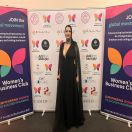
2025 was a year of unexpected recognition. As a brand that has always valued people over profit, I never expected to be acknowledged, let alone awarded. Then, at the start of 2026, I was recognised as one of the F:Entrepreneur 100 Inspiring Female Leaders in the UK.
And that is what I needed to see when I was younger. Someone visible. Someone open about their struggles. Someone saying, “You can do this. You can learn to advocate. You can be yourself and still succeed.” Maybe if I had seen that, I would have struggled less. Maybe I would have understood myself sooner.
That is why I do what I do. Visibility and representation matter. And if sharing my story can stop even one child crying alone in a school toilet at break time, then it is worth it.
Lynsey Drewett
 Return to blog