
Section menu
Community

Category menu
More Than the Tics
 Posted Thu 14th May 2026 at 11:31
by Stuart Bull

Share
by Stuart Bull
If you met me in a professional setting, you’d probably see someone confidently managing teams, overseeing thousands of homes within a housing association, attending meetings, juggling performance targets and trying to look like they definitely know what they’re doing.
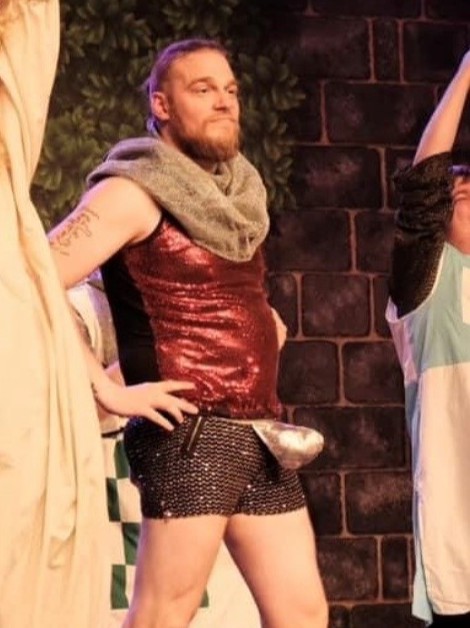
If you met me in a theatre, you’d probably see someone singing show tunes, throwing themselves into ridiculous dance routines, or pretending to be a completely different person under stage lights.
What you may not immediately notice is that throughout all of that, I also have Tourette syndrome.
Tourette’s has been part of my everyday life since I received my diagnosis in 2011, at the age of 24! Motor tics, vocal tics, suppressing tics, the mental exhaustion that comes with it - it’s all there, every single day. Some days are quieter than others. Some days feel like my brain and body are staging their own West End production without asking permission first.
But despite what many people assume, Tourette’s has never stopped me from living a full life.


That doesn’t mean it’s easy.
There’s a strange kind of exhaustion that comes with suppressing tics for long periods of time. For me, suppression is something I’ve learned to manage well in professional environments and on stage. It’s important to say my way isn’t everyone’s way - every person with Tourette’s experiences things differently. But over time, I’ve developed techniques that help me function in meetings, presentations and performances. From counting, tapping or playing out a little percussion tune with my feet or hands.
The catch? Suppression always wants paying back.
When I come off stage, get home from work, or finally relax after holding things together all day, the tics often come flooding back harder and faster. It can feel a bit like shaking up a fizzy drink all day and finally opening the lid. Glamorous, really.
Performing has actually been one of the biggest joys of my life. I’ve been involved in performing since I was six years old proudly playing the clock in the school production of Cinderella! Performing is something I have participated in a bit more seriously from around sixteen onwards. Theatre became a place where I could express myself confidently, connect with people and do something I genuinely love. I have actually met others with Tourette’s within the theatre family and have forged meaningful friendships with them (shoutout to those guys!)
Of course, there’s irony in someone with vocal tics choosing a hobby where people literally hand you a microphone. But theatre people, in my experience, are some of the most accepting and supportive people you’ll ever meet. I’ve been incredibly fortunate to encounter kindness, patience and understanding both on stage and within my professional career. The same applies to many colleagues and friends who have simply accepted Tourette’s as part of who I am, rather than something that defines me.
That acceptance matters more than people realise. Because alongside the positive experiences, there have also been difficult moments.
Like many people with Tourette’s, I watched the BAFTA incident and the wave of social media comments that followed with a mixture of frustration, sadness and familiarity. Seeing people mock behaviours they don’t understand, or reduce Tourette’s to a punchline, can be exhausting. Not because it’s new - most people with Tourette’s have encountered ignorance before - but because it reminds you how misunderstood the condition still is. People can’t control their tics, but others can control their reactions
What many people don’t see is the constant mental calculation behind the scenes. The scanning of environments. The anticipation. The wondering whether this is going to be the moment somebody stares, laughs, records you, or assumes you’re being disruptive.
Over time, though, you also develop resilience. Sometimes you even develop a sense of humour about it. Honestly, you have to. When your own body occasionally makes noises or movements at completely inappropriate moments, you either laugh or spend your life apologising.
I’ve chosen laughter where I can.
Tourette’s has absolutely shaped who I am. It has challenged me, exhausted me, embarrassed me and frustrated me. But it has also made me more empathetic, more determined and more understanding of other people who may be quietly fighting battles nobody else can see.
Most importantly, it has never stopped me pursuing the things I love.
I’m still building a career I’m proud of. I’m still performing on stage. I’m still being a partner, a dad, a friend and a colleague. I’m still showing up.
And I know there are many others in the Tourette’s community doing exactly the same thing every single day.
Sometimes loudly. Sometimes quietly. Sometimes with jazz hands and vocal tics. But it is important to realise that we, those living with Tourette’s and still showing up, are seen and supported by an incredible community!
Finally, a reminder for everyone that we are thriving nonetheless.
 Return to blog


