
Category menu
A new co-designed care pathway for children and young people with tics is now available!
Posted on 23 June 2026 by Pippa McClounan

Share
Across many areas of England, healthcare services for children and young people are limited and inconsistent. A team of researchers at the University of Nottingham, led by Professor Maddie Groom, secured NIHR funding for the INTEND study (ImproviNg Tic services in EnglaND). INTEND aimed to co-design a care pathway design for children and young people with tics to be implemented across services in England.
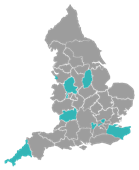
The research team found that there were only 12 service providers for tics in England and five of these were in London (see map below). This means that children and young people living in other regions without services are often unable to access healthcare for tics.
Research Aims
Findings
Through a nationwide expert survey, specialists in tics and Tourette syndrome identified the essential features of an effective care pathway. These included:
- Pathway structure — how services should be organised
- Healthcare roles — which professionals should assess and treat tics
- Referral routes — where children and young people should be referred from
- NHS funding — how pathways should be resourced locally
- Training needs — what skills healthcare professionals require
- Monitoring and review — how young people should be followed up within services
Through a final team workshop, a final 43 service features were approved to form the foundation of the pathway.
The INTEND Integrated Care Protocol (pathway) and accompanying written guidelines have been finalised and can be viewed here.
Read our paper on the process of developing the pathway and guidelines here
Struggling to access healthcare or support for tics in your local area?
Integrated Care Boards (ICBs) are in charge of delivering healthcare services locally and ensuring they are appropriately funded. You can contact your local ICB and share your concerns and needs.
 Return to news


