
Category menu
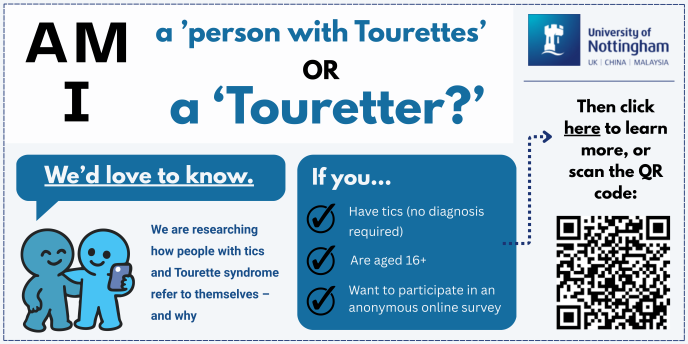
Am I a ‘person with Tourette syndrome’ or a ‘Touretter’? An online survey exploring language preferences for people with tic disorders
Posted on 14 July 2026 by Pippa McClounan

Share
From the University of Nottingham
Researchers at the University of Nottingham are looking for people with Tourette syndrome or tic disorders to take part in a study exploring the language individuals prefer to use when describing themselves and others.
The study will examine preferences for terms such as "person with Tourette's" (person-first language) and "Tourettic person" (identity-first language), and aims to better understand the reasons behind these preferences. By sharing your perspective, you can help inform how the Tourette's community is represented and discussed in research, healthcare, and wider society.
This MSc research project seeks to amplify community voices and understand the language that feels most respectful and meaningful to those with lived experience.
What's involved?
Taking part involves completing an anonymous online questionnaire, which should take around 10–20 minutes to complete. The survey is open to anyone aged 16 or over who has lived experience of tics, Tourette syndrome, or another tic disorder, whether formally diagnosed or not.
Participants will be asked some general demographic questions, questions about their experience of tics and quality of life, and questions about the language they use to describe themselves and others within the tic disorder community. There will also be an opportunity to share your own thoughts on why certain terms feel more meaningful, appropriate, or respectful to you.
Participation is entirely voluntary, and you can stop the survey at any time before submitting your responses.
Why participate?
By taking part, you can help researchers better understand how people with Tourette syndrome and tic disorders prefer to be described, ensuring that the voices and perspectives of those with lived experience help shape future research, healthcare communication, and public understanding.
 Return to news


